
J-Link BASE
The Entry-Level Debug Probe
Cost-effective entry into professional debugging with SEGGER’s proven J-Link platform
Reliable performance for standard development across a wide range of devices
Basic feature set, with advanced capabilities available in higher-tier models
1. Supported Devices
2. Use Cases
3. Upgrade Path
4. Software
5. Buyers Guide
6. Customer Support
7. Product Images
8. Technical Specifications
9. Package Content

Key features

High Download Speeds
J-Link BASE offers download speeds of up to 1 MB/s, ensuring that project development moves forward smoothly and reliably, with minimized download times.

Real Time Transfer
J-Link BASE offers Real Time Transfer (RTT), which provides a simplified path for information to travel when an application is running. Users can also easily monitor changes in operation.
Broad CPU and IDE Support
J-Link BASE works with an extensive range of microcontrollers and IDEs. It enables users to connect their selected microcontroller with their favorite IDE.
Note
Compared to higher-end J-Link models, the J-Link BASE offers a reduced feature set. Advanced capabilities such as download speeds of up to 4 MB/s, unlimited breakpoints in flash memory, and support for tools like Ozone and J-Flash available in higher-tier models.
For full access to SEGGER's debugging ecosystem and maximum performance, SEGGER's recommend models such as J-Link Pro or J-Link Ultra.
Supported Devices
The list of supported manufacturers, families, devices, and systems on a chip includes tens of thousands of devices in hundreds of devices families.
Use Cases

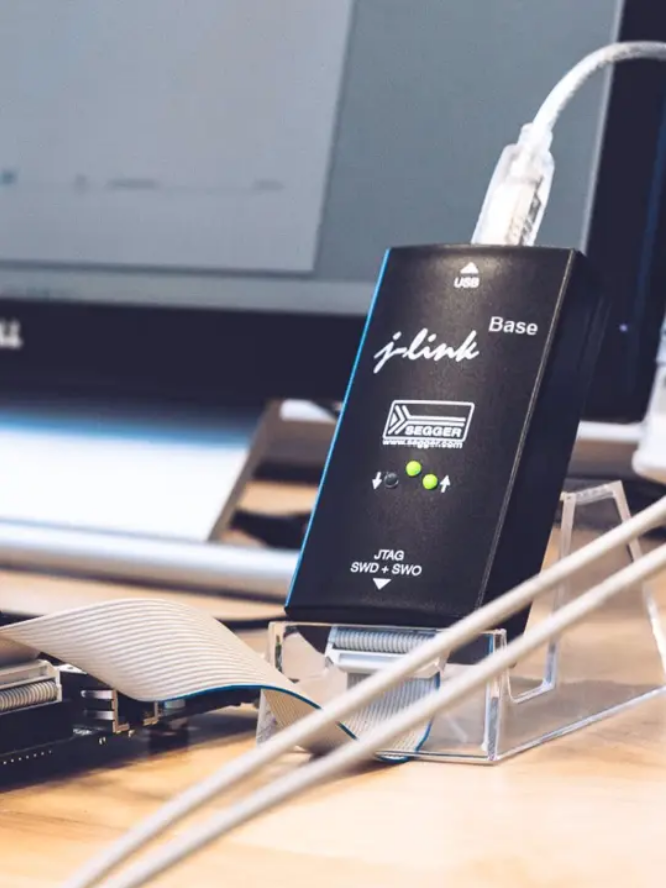
Entry-level debug hero
Basic debug support
J-Link BASE is a modern debug probe that is both smart and a swift communicator, which means communications are carried out not only reliably, but also faster than with a simpler probe.
SEGGER's RTT debug communication interface is also available, and all popular IDEs offer support for J-Link.
Should a toolchain not support the comprehensive feature set, including unlimited breakpoints in flash memory and monitor-mode debugging, found in the more-advanced J-Link products, J-Link BASE is a sensible, cost-efficient alternative for use with OPENOCD or similar tools.
Upgrade Path
The J-Link BASE offers basic functionality. To use the full range of functions of a J-Link PLUS, for instance, the J-Link Upgrade BASE to PLUS is needed.
This license upgrade comes with a software bundle that includes the J-Flash / J-Flash SPI license, software to program EEPROM and flash chips in Arm systems, as well as a J-Link Unlimited Flash Breakpoints license. Included is also the Ozone J-Link Debugger & Performance Analyzer, the Monitor Mode Debugging technology, the J-Link RDI / RDDI license, and the license pack for the RDI / RDDI interface.

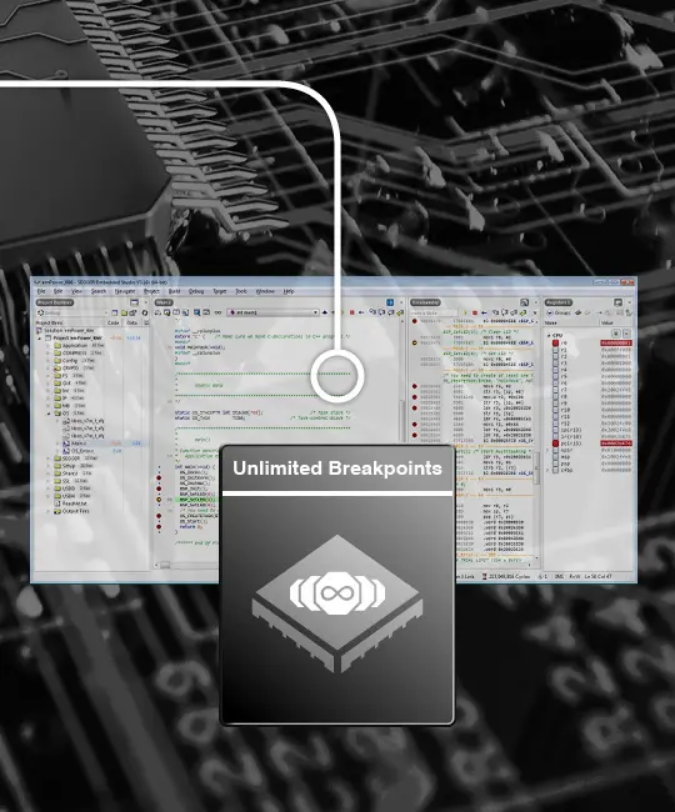
Ozone is a professional, full-featured standalone graphical debugger for embedded applications that is capable of debugging the output of any toolchain or IDE. It includes all common debug controls and information windows. Furthermore, it enables high-speed application-to-target programming and debugging of information windows for any purpose, including disassembly, memory issues, and more. Ozone is available with J-Link PLUS, PRO, PRO PoE, and ULTRA+.
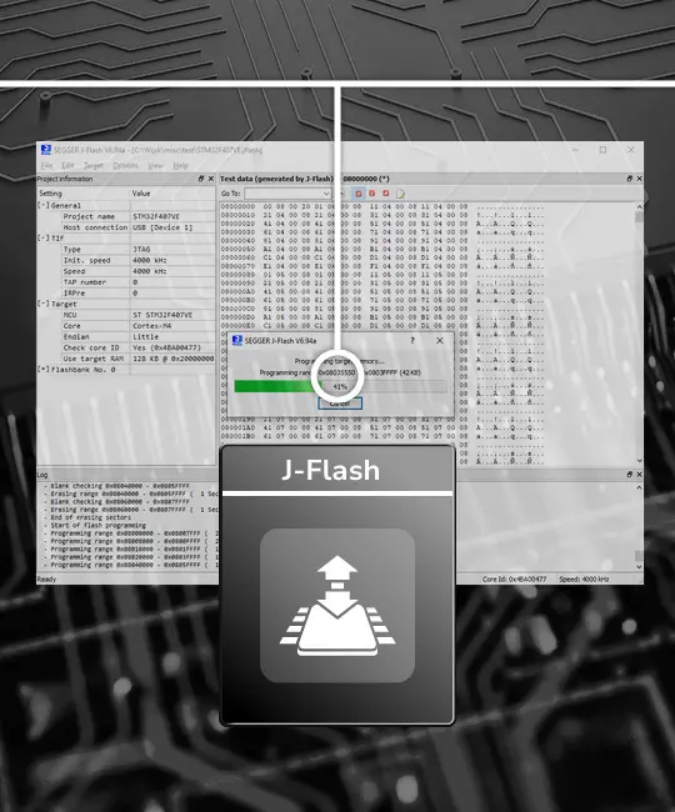
J-Flash enables programming of microcontroller internal and external flash memories. Exceedingly versatile, it runs on Microsoft Windows, Linux, and macOS, and it supports Cortex Arm, RX, and Power PC devices and cores. For all members of the J-Link and J-Trace families positioned aboved J-Link BASE, J-Flash is included in the J-Link Software and Documentation Package
Unlimited Flash Breakpoints is a special feature that is included with J-Link's software. It allows a user to set an unlimited number of breakpoints when debugging in flash memory. Without this feature, the number of breakpoints that can be set in flash memory is limited to the number of hardware breakpoints that the CPU's debug unit supports. For all members of the J-Link and J-Trace families positioned above J-Link BASE, Unlimited Flash Breakpoints is included in the J-Link Software and Documentation Package.
Software
All software is included free of charge. As a multi-platform solution, J-Link BASE comes with setup and control software for Linux, macOS, and Windows. Software and firmware updates are included.
Buyers Guide


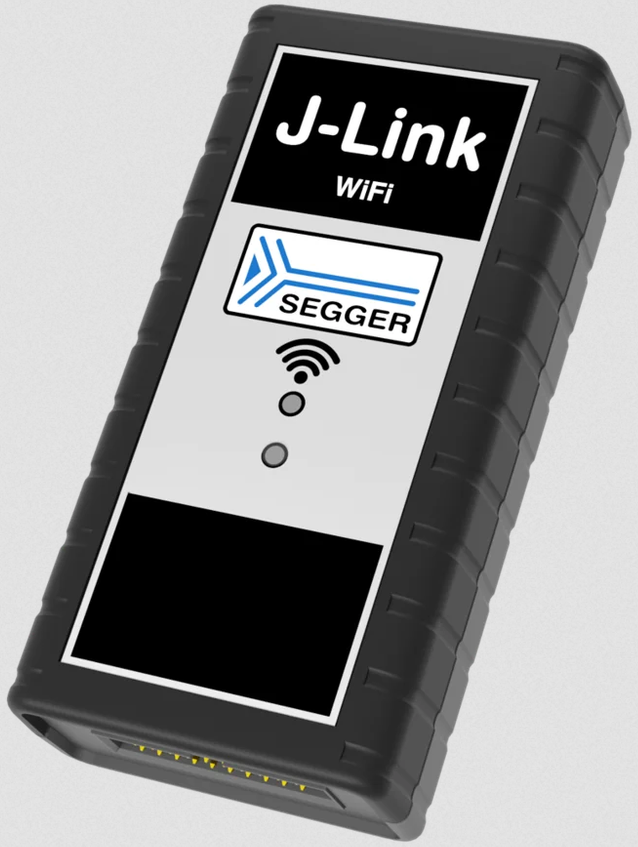
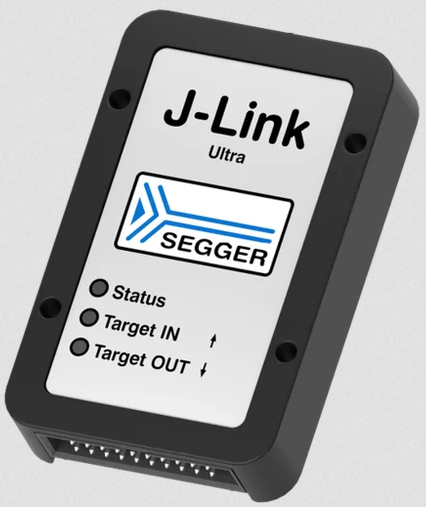

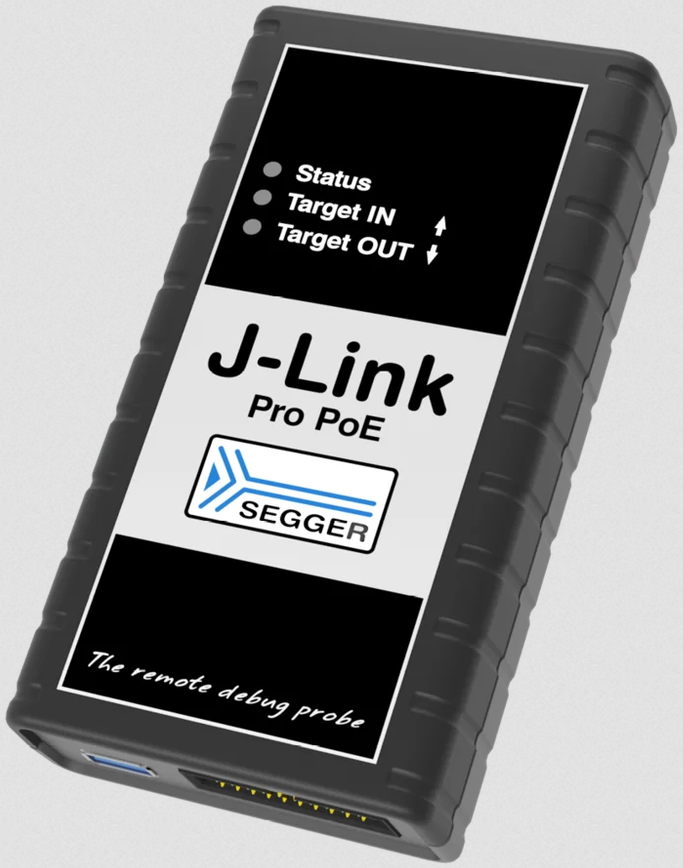
Customer Support
J-Link Pro comes with one year (12 months) of Basic Support. Beyond that, SEGGER's Extended Coverage gives users the option to extend the hardware warranty and Basic Support for one additional year (12 months) or two additional years (24 months).
Product Images
 J-Link BASE Classic Front
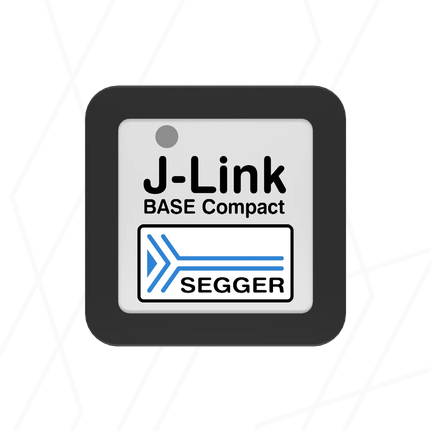 J-Link BASE Compact Front
 J-Link BASE Classic Host Connector
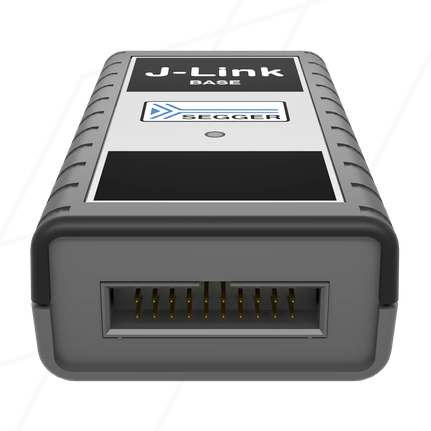 J-Link BASE Classic Target Connector
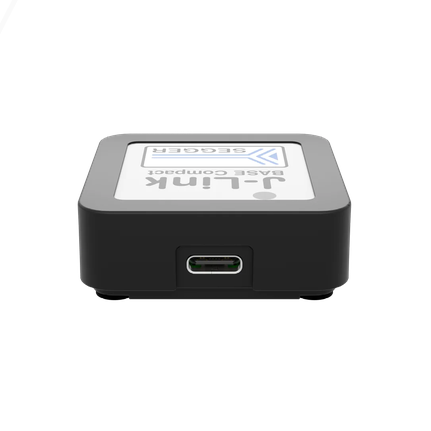 J-Link Compact Debug Probe Host Connector
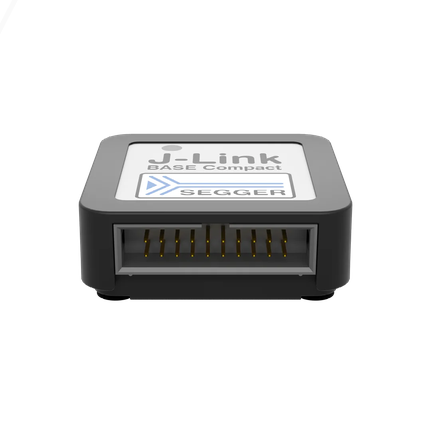 J-Link Debug Probe Target Connector
Technical specifications
| General | |
| Supported OS | Microsoft Windows (x86/x64), Linux (x86/x64/Arm), macOS (x86/Apple Silicon) |
| Electromagnetic compatibility (EMC) | EN 55022, EN 55024 |
| Operating temperature | +5°C … +60°C |
| Storage temperature | -20°C … +65 °C |
| Relative humidity (non-condensing) | Max. 90% rH |
| Mechanical | |
| Size of J-Link BASE Classic (without cables) | 100mm x 53mm x 27mm |
| Weight of J-Link BASE Classic (without cables) | 70g |
| Size of J-Link BASE Compact (without cables) | 46mm x 46mm x 17mm |
| Weight of J-Link BASE Compact (without cables) | 20g |
| Available interfaces | |
| USB interface (J-Link BASE Classic) | USB 2.0 (Hi-Speed); USB Type B |
| USB interface (J-Link BASE Compact) | USB 2.0 (Hi-Speed); USB-C |
| Target interface | JTAG/SWD 20-pin (adapters available) |
| JTAG/SWD interface, electrical | |
| Power supply | USB-powered Max. 50mA + Target Supply current. |
| Target interface voltage (VIF) | 1.2V … 5V |
| Current drawn from target voltage sense pin (VTRef) | < 25µA |
| Target supply voltage | 5V (derived from USB voltage) |
| Target supply current | Max. 300mA |
| Reset type | Open drain. Can be pulled low or tristated |
| Reset low level output voltage | VOL <= 10% of VIF |
| For the whole target voltage range (1.2V <= VIF <= 5V) | |
| LOW level input voltage (VIL) | VIL <= 40% of VIF |
| HIGH level input voltage (VIH) | VIH >= 60% of VIF |
| For 1.2V >= VIF <= 3.6V | |
| LOW level output voltage (VOL) with a load of 10 kOhm | VOL <= 10% of VIF |
| HIGH level output voltage (VOH) with a load of 10 kOhm | VOH >= 90% of VIF |
| For 3.6 <= VIF <= 5V | |
| LOW level output voltage (VOL) with a load of 10 kOhm | VOL <= 20% of VIF |
| HIGH level output voltage (VOH) with a load of 10 kOhm | VOH >= 80% of VIF |
| JTAG/SWD interface, timing | |
| Target interface speed | Max. 50 MHz |
| SWO sampling frequency | Max. 30 MHz |
| Data input rise time (Trdi) | Trdi <= 20ns |
| Data input fall time (Tfdi) | Tfdi <= 20ns |
| Data output rise time (Trdo) | Trdo <= 10ns |
| Data output fall time (Tfdo) | Tfdo <= 10ns |
| Clock rise time (Trc) | Trc <= 3ns |
| Clock fall time (Tfc) | Trc <= 3ns |
Assembly Dimensions
The compact variant of the J-Link PLUS is designed to mount securely and unobtrusively into development or end user equipment. The small size and two mounting holes enable placing the J-Link PLUS Compact into existing equipment housings or to reserve space for direct-to-PCB mounting.
Typical applications are test fixtures that are used to automate firmware verification during development, or long-term test setups. It also can be used for integrated firmware reflash or service purposes inside end equipment, minimizing the number of tools that service technicians must carry around.

Explosion view of the J-Link BASE Compact

Assembly dimensions of the J-Link BASE Compact
Package Content
J-Link BASE Classic


J-Link BASE Classic
0.1" 20-Pin Ribbon Cable
USB Cable
J-Link BASE Compact

J-Link BASE Compact
0.1" 20-Pin Ribbon Cable
USB-C Cable