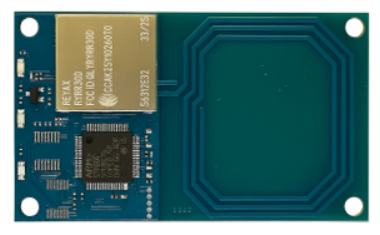
NFC/RFID
RFID (Radio Frequency Identification) is a system composed of a radio transponder, receiver and transmitter. By trigging an electromagnetic interrogation pulse from a nearby RFID reader device, the tag transmits digital data, usually an identifying inventory number, back to the reader. This technology helps the device read the information contained in a wireless device or tag from a distance without making any physical contact or requiring a line of sight. Passive RFID systems use tags that are powered by electromagnetic energy from an RFID reader without any internal power source, therefore have the advantage of requiring non-batteries and are more economical in price. It is widely used for applications such as supply chain management, human tracking, access control, and smart labels.
| Model Name | Interface | Default Baud Rate | Frequency | Protocol | Read Range (REYAX Standard Card) | Encryption | OTA | Firmware |
|---|---|---|---|---|---|---|---|---|
| RYRR10S | UART/SPI | 57600 | 13.56MHz | ISO15693,ISO14443A/B, and FeliCa | 4 CM | No | No | Fix |
| RYRR20D | RS-232 | 19200 | 13.56MHz | ISO15693,ISO14443A/B, and FeliCa | 4 CM | No | No | Standard/Customized |
| RYRR30I | UART | 115200 | 13.56MHz | ISO15693,ISO14443A/B, and_FeliCa ISO18092 *P2P special version | 8 CM | No | Yes | Standard/Customized |
| RYRR30D | +3.3V UART / RS-232 / USB2.0 | 115200 | 13.56MHz | ISO15693,ISO14443A/B, and FeliCa | 8 CM | Apple_Wallet_VAS_Google_Smart_Tap_pass | Yes | Standard/Customized |
| RYRR50S | UART | 19200 | 13.56MHz | ISO14443A Mifare DesFire | 5 CM | Yes | TBD | Standard/Customized |
| RYRR39U | USB 2.0/UART | 115200 | 840~960MHz | UHF_ISO_18000_6C_(EPC_Class1_Gen_2 | 6 ~ 9 M | TBD | Standard/Customized |